About Us
Autonomous Tenants Union (ATU) is a tenant-led volunteer collective based in Albany Park, Chicago.
ATU is dedicated to advancing the interests of working-class tenants by building a mass movement. We do this by building tenants unions to fight against evictions and for dignified living conditions. We educate ourselves on how to organize and win, and seek to create a community based on solidarity and cooperation.

Theory of Change
We build relationships amongst our neighbors in Albany Park, deepening the connections that proximity makes possible and building from them the collective power that the current rental system is structured to prevent.
Together, we are helping one another shift from understanding tenant struggles as individual problems, to understanding that those struggles are connected, patterned, and rooted in the power dynamics of the rental system itself.
We believe in, and fight for, the abolition of eviction and displacement. We center the sharing of stories throughout our work, to build a collective analysis and a collective imagination. We work to meet immediate needs via mutual support, the collective caring for the collective.
By anchoring our work in the lived realities of Albany Park tenants and nurturing the relational infrastructures that allow us to act together again and again, we are not only responding to the crises of the present — we are building the organized, dignified, and resilient tenant movement needed to reshape the future of housing in Albany Park and beyond.
Points of Unity
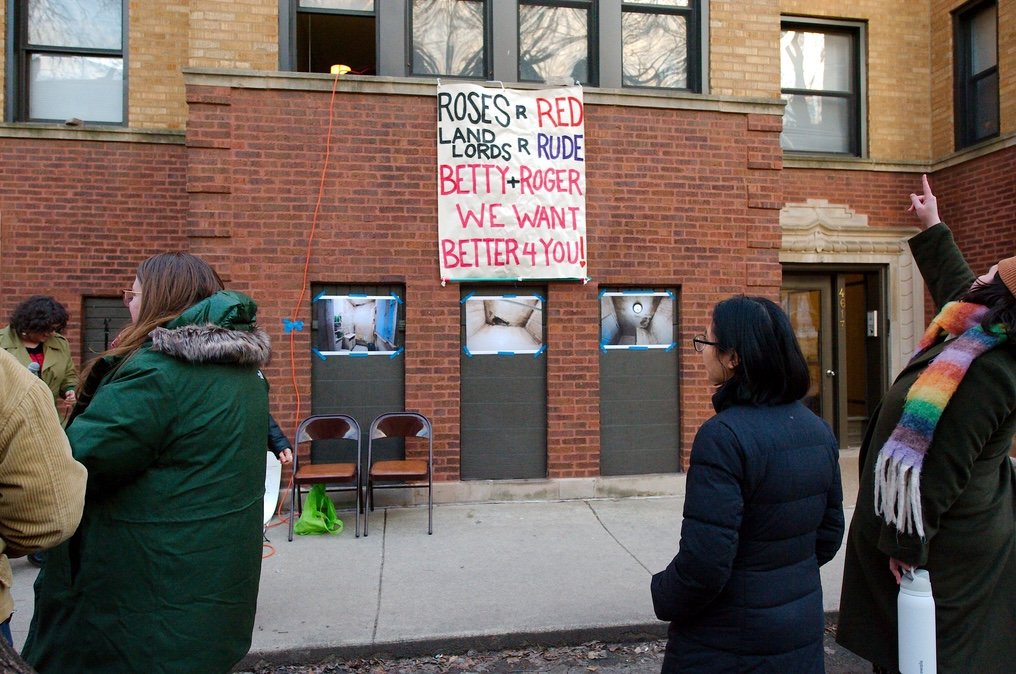
We have a collection of resources for tenants to understand and exercise their rights in the City of Chicago as well as information on tactics we use in organizing and fighting for tenant power.

-
No one is alone. We commit to having each other’s backs, and to listen to and support one another through our struggles.

-
Taking action together gets the goods. We will not win what we deserve if we fight alone.

-
No matter what the reason, no one should have to face displacement or homelessness.

-
Housing needs to be permanently owned by and in control of the community, instead of being owned by the rich for the sole purpose of making profit.

-
No one deserves to live in unsafe and unhealthy conditions.

-
An injury to one is an injury to all.

-
We work every day to challenge sexism, racism, ableism, homophobia, transphobia and all other prejudices that divide us.
-
Everyone needs a place to live, but nobody needs a landlord. Landlords exploit us by owning more property than they need and collecting rent from the rest of us. The more money they extract from us, the more property they can buy – they get ahead, and we fall behind. Exploitation is central to how a landlord makes a profit, so landlords are the enemy in our fight for housing that is free of exploitation.
-
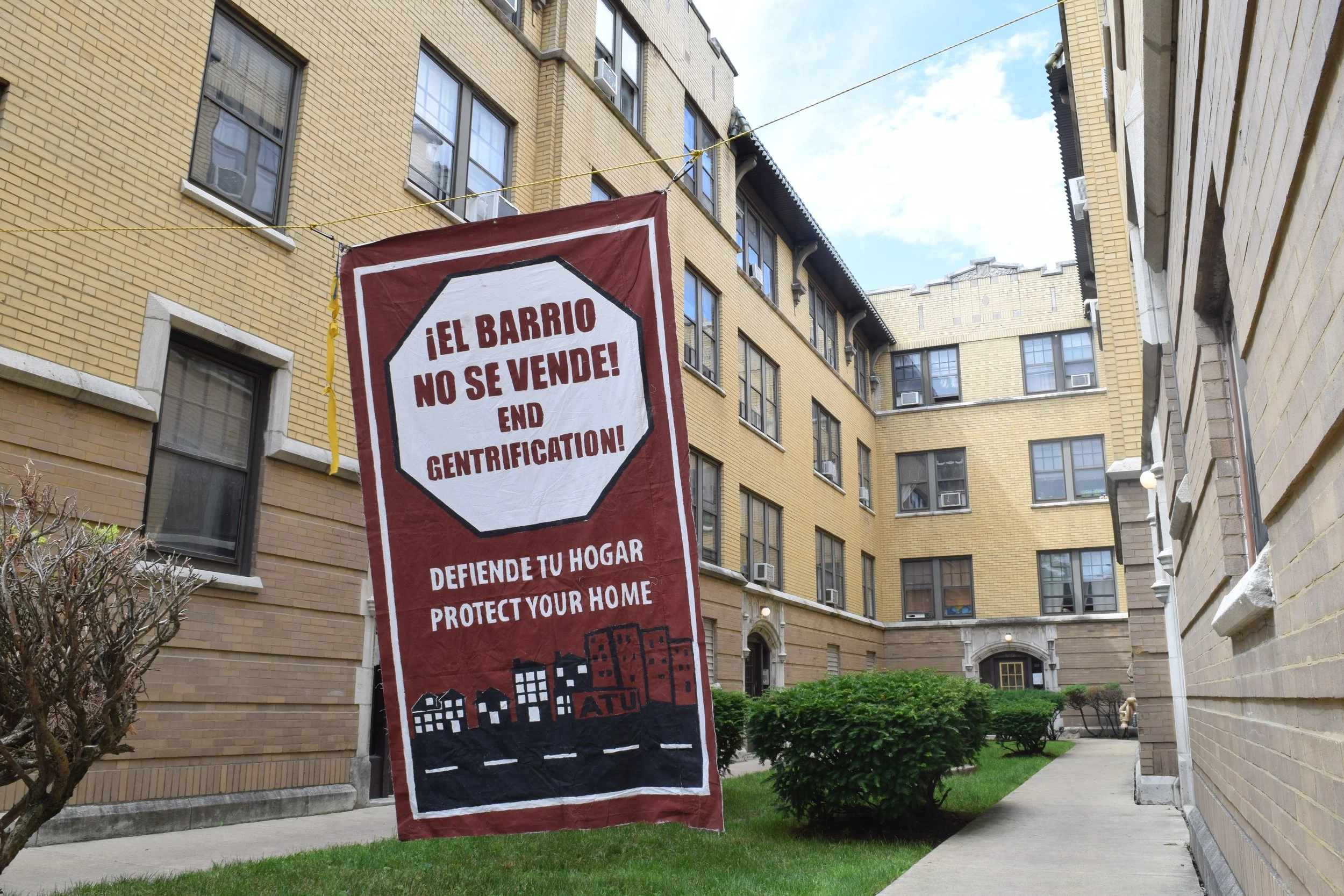
Gentrification is a process led and nurtured by various stakeholders like developers, landlords, business owners, and politicians.
Our History
Autonomous Tenants Union (ATU) was founded in Albany Park in 2016, amidst the lasting impacts of the 2008 housing crisis. During the foreclosure crisis, many POC homeowners lost their homes, becoming tenants once again, and many POC landlords, facing financial crisis, left their buildings in disrepair. Predatory developers bought up multi-unit buildings quickly, mass evicted tenants, and drove up rents with cosmetic repairs.
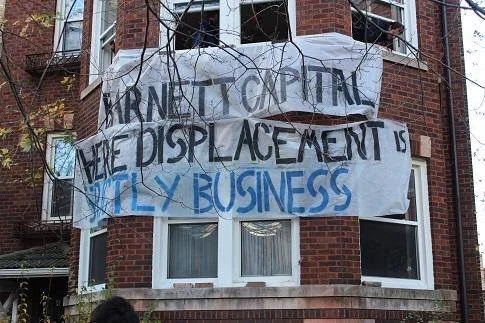
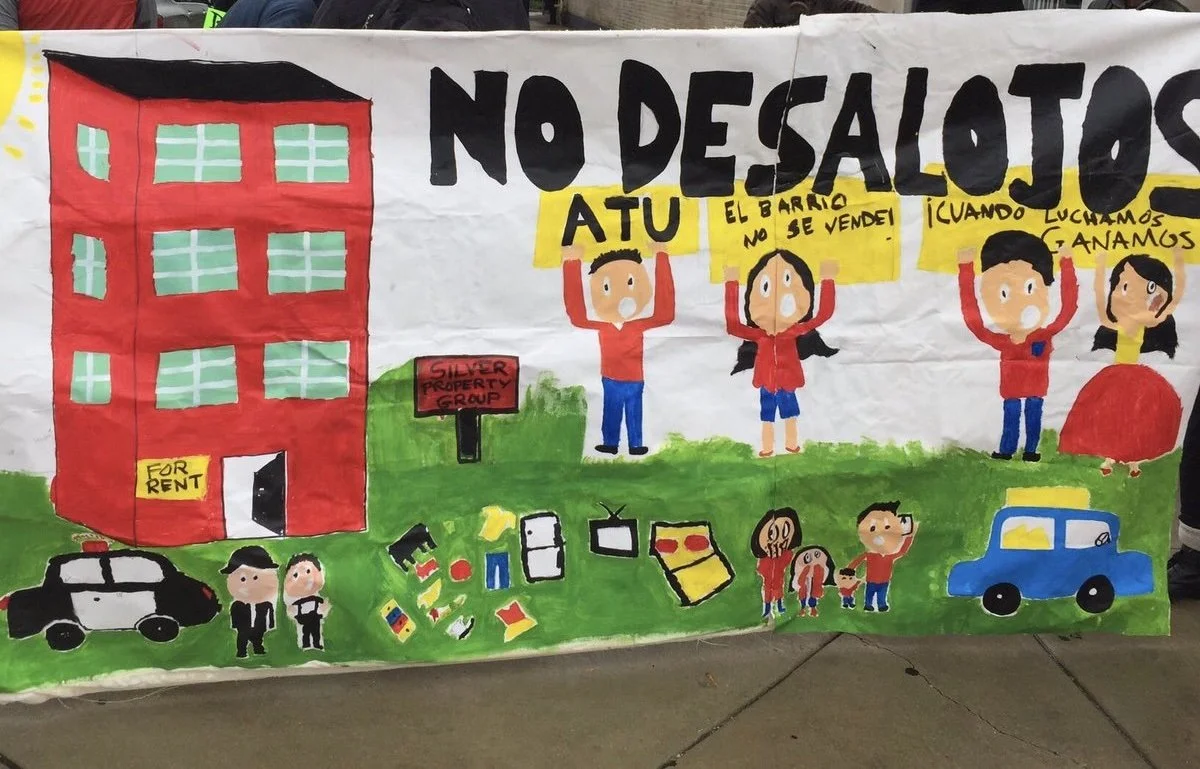
Our origins began in 2015, when staff at a local community center launched a campaign to support a student of the center who lived in a building that developer Silver Properties bought and subsequently served everyone 30-day eviction notices. Several months later, many of the staff of the community center living in the same building received 30-day eviction notices of their own from their building’s new owners Barnett Capital. We fought back for 10 months, winning relocation assistance and nine months of waived rent. The experience radicalized many of us; we decided that we wanted to dedicate more time to tenant organizing, and the Autonomous Tenants Union was born.
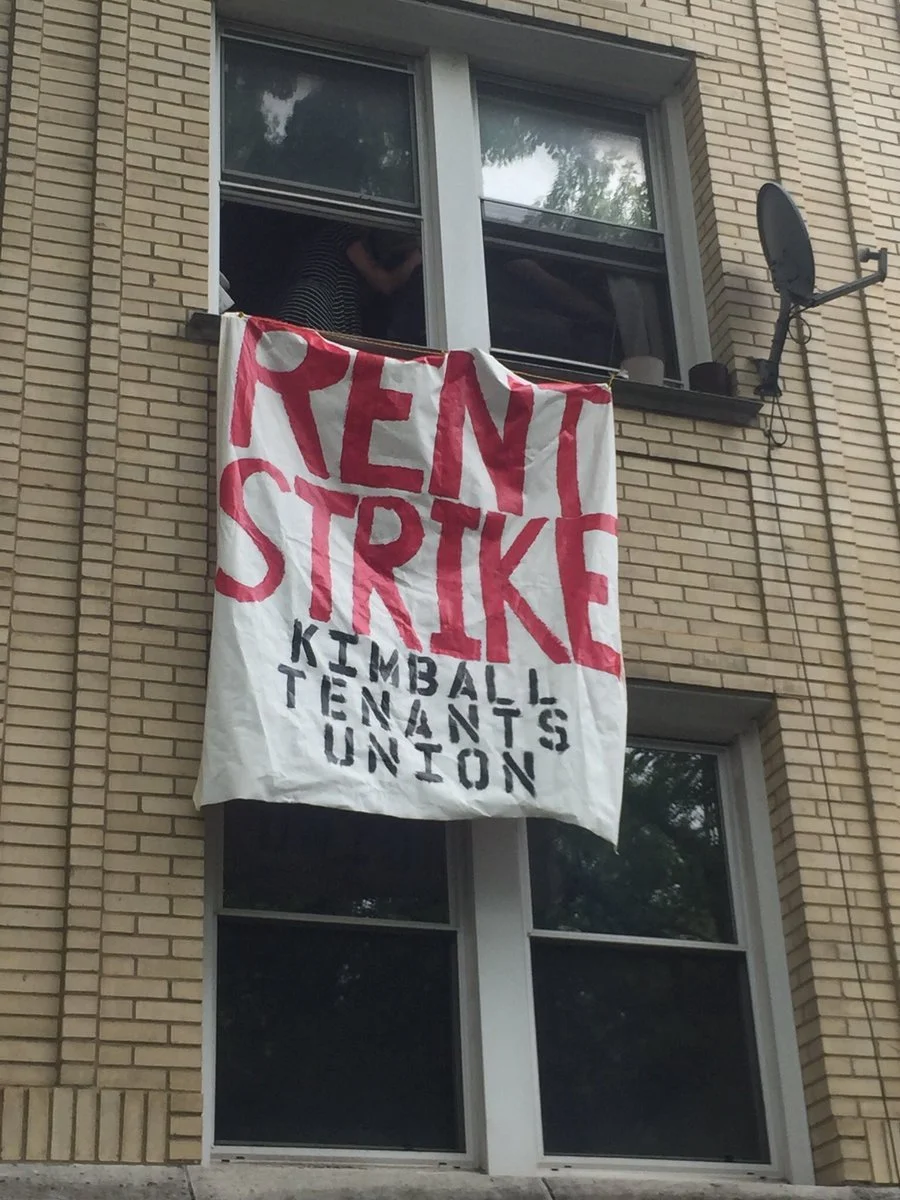
After organizing a tenants union in a Little Village building also bought by Barnett Capital, we recognized that our greatest assets were our relationships and power within our immediate Albany Park community and decided to keep our organizing local. Since our founding over a decade ago, we have helped found dozens of local tenant unions and have supported countless low income families and long term senior residents in our neighborhood from being displaced.
-
We work out of living rooms and community spaces across Albany Park. We are grateful to our longtime partners Christ Lutheran Church and Latino Union for community meeting space, and for our neighbors, fellow organizers, and tenants who have opened their homes and hearts and value deep relationships and joy alongside the struggle.
In 2020, in response to the COVID-19 pandemic, we, alongside several other housing justice groups in the city, co-founded the Chicago Tenants Movement, a coalition of tenant groups across the city, to support tenants who were unable to work, struggling to pay rent, and facing harassment and neglect from their landlords. While this coalition did not continue beyond 2021, the lessons and relationships that were fostered have endured.
Many of our members are immigrants: we are always considering the intersections of immigration and housing, and all of our member meetings and materials are in English and Spanish. We do our best to prioritize language justice in all of our spaces. In 2025, that intersection became urgent. Ahead of violent immigration enforcement by the federal administration, we mobilized a coalition of our movement siblings in the neighborhood to be able to collaborate quickly and build a space where established nonprofits, autonomous groups, volunteer-led groups, and electeds could come together and strategize to keep each other safe. This coalition, Albany Park Alliance, allows us to organize intersectionally with groups supporting unhoused neighbors, doing mutual aid, working with day laborers and street vendors, doing rapid response, and other community-based work focused around issues such as food justice and public policy. Together, in various forms, we are building power and protecting each other and our neighbors.